
Texas Website Modernizations
Laws were popping up left and right forcing small agencies in Texas to modernize legacy websites
With small budgets, many agencies needed a solution to modernize websites without breaking the bank
Situation
After a large modernization by Texas DSHS, a slew of smaller agencies started asking our work group for similar work, but at a fraction of the cost. The company I worked for was not well known for it's cheap pricing, but with the increasing number of shitty government agencies out there, I wanted to be able to enable the ones doing good.
Task
The first steps came about when transferring Sketch files over to Figma. Initially, I was updating files to Figma and just included a bit of housekeeping by creating a basic design system to drive consistency. However, knowing many agencies wanted to move to Drupal as their CMS, the job quickly became creating a scalable program.
Action
Stumbling into something
Any given government agency website really doesn't have more than 10-15 different page types, which means, unless you have a fully static website, or something that needs wild customization, you can configure templates to meet you needs pretty easy. This was the sweet spot I was aiming for.
Build the plane while it flies
The name of the game from that point forward was 'incremental updates'. There was no M&O budget, no product team to make updates, I just needed to update the program as we went. Ran a new workshop? Add it in. Refined the templates? Add it in. Any improvements fueled the next project.
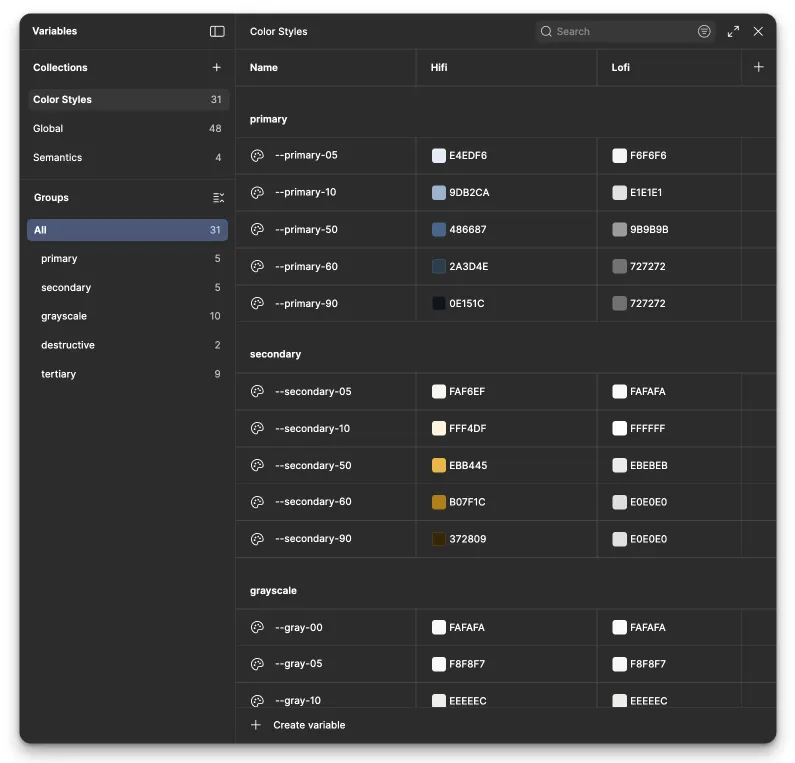
As Figma rolled out more design systems tools, the program evolved to work with it. There was always a fine line of what would be helpful to incorporate verses what was needed to accelerate projects. Colors running on variables, very helpful. But Primatives, semantics and other layers of color to define every element, not so much.
Let's see some work bro!
This program has been run across seven projects in the last two years, and a case study for each is really not needed. Instead I'll give some high level details on some fun ones:
Texas HHS Family Resources
Description
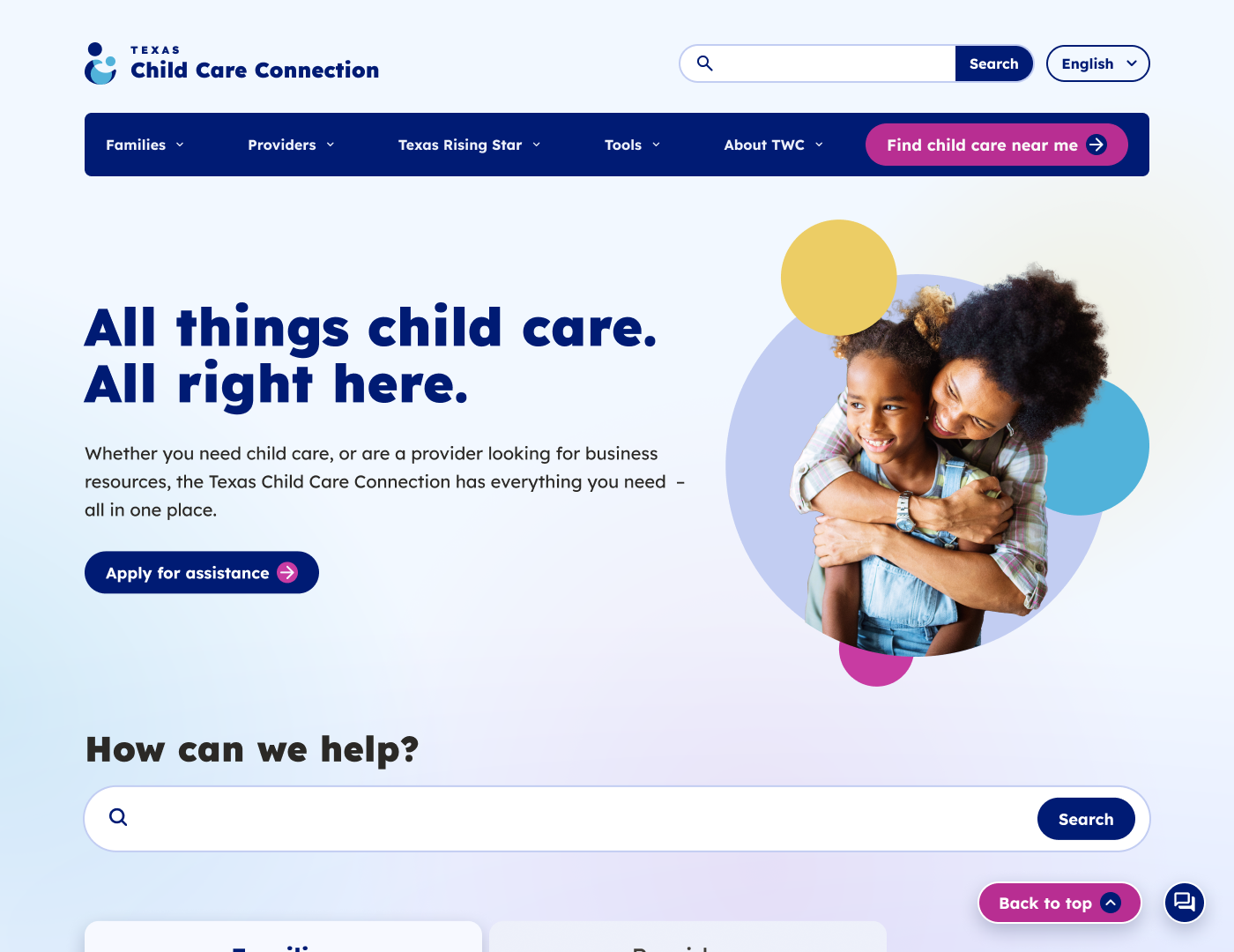
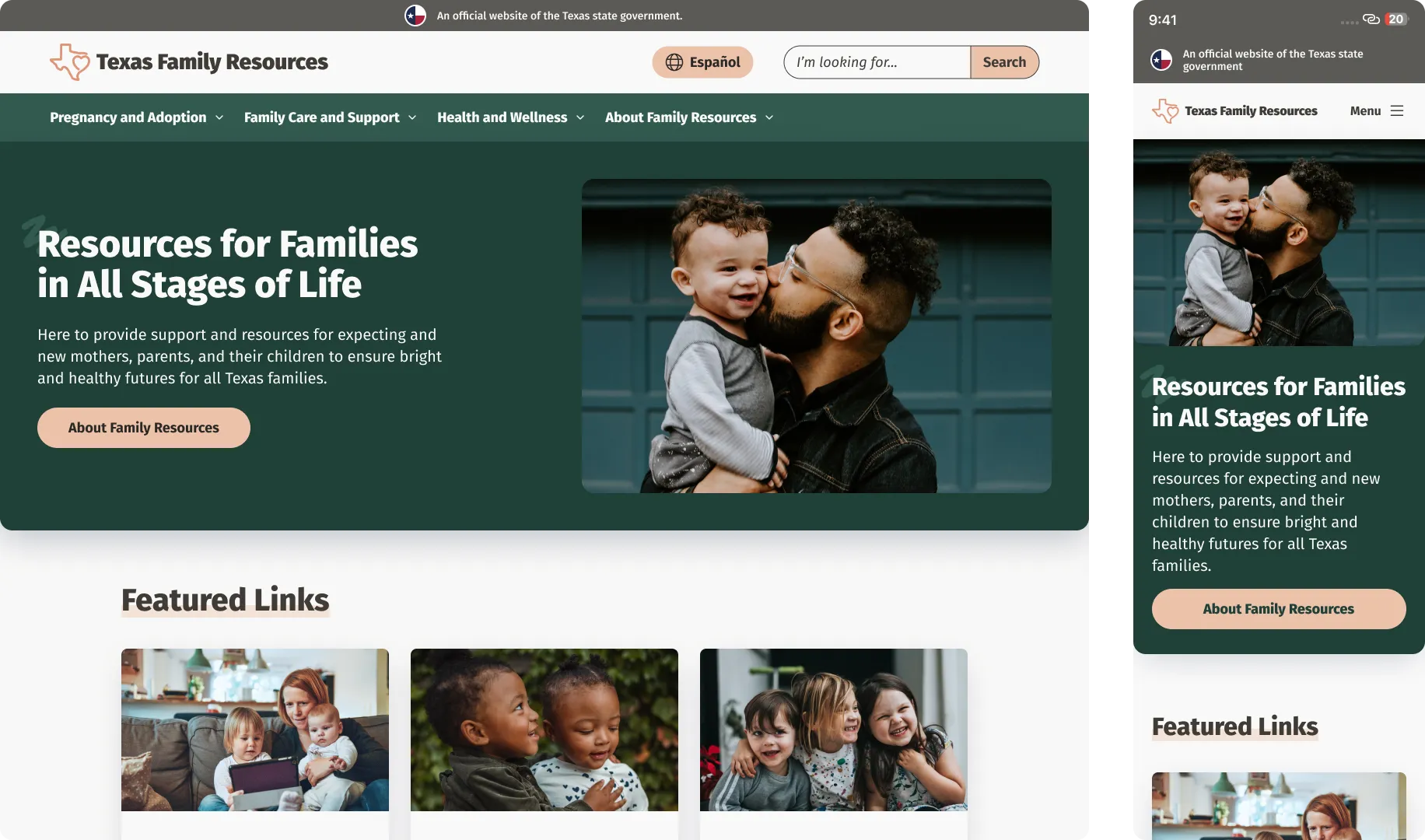
A small team in TX HHS looking to modernize their single page link farm into a CMS that could help growing families.
Challenges
- Creating something that felt different than previous projects with minimal budget required pushing the client outside agency standard colors.
- The team loved this client, so to help get them excited for future work, we hosted a planning workshop and gave them a roadmap.
Texas TWC TX3C
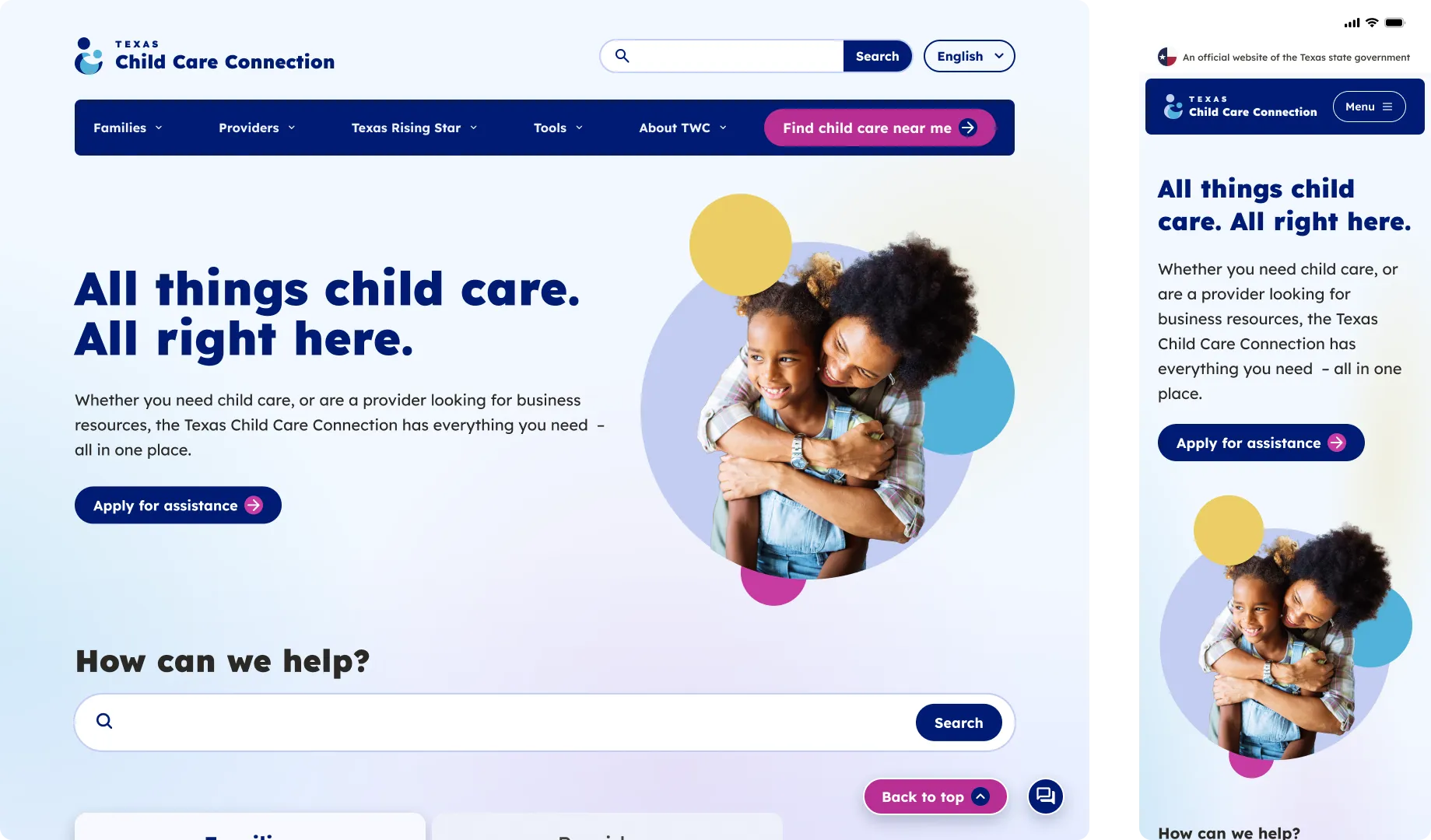
Description
Many web pages and documents combined and split amongst two new sites.
Challenges
- Knowing we had more creative freedoms, but a pretty tight timeline I wanted to encourage the team to spend more time exporling new treatements of existing components.
- For whatever reason, the client wanted to use the same brand as a different website they owned. This meant pushing the visuals in a new dirction.
Texas TWC Early Childhood

Description
Basic site lift-n-shift with a more complexchild care screener app.
Challenges
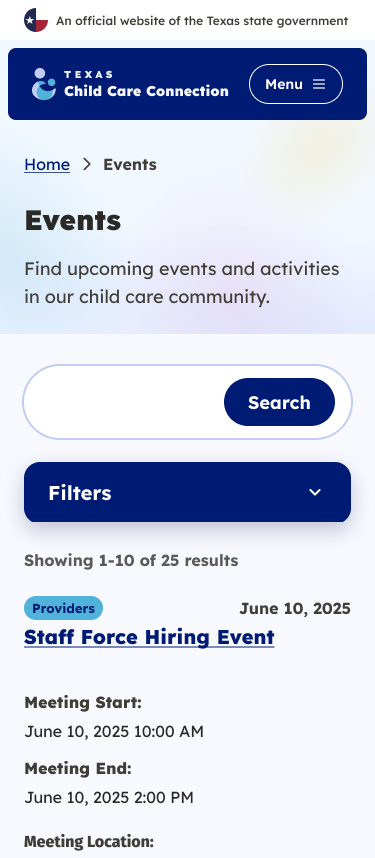
- The site was kept fairly simple in the redesign, not a lift-n-shift by any means, but not beautiful either. The bulk of the time was spent refining the flow of the screener. While initiall billed as a simple flow, it turned out to be much more complex and dynamic.
Results
~20%
Estimated reduction in artifact creation time
385.7%
Increase in average engagement time on Family Resources website
37.7%
Drop in home page bounce rate on Family Resources website
Reflections
How we doin?
This was always a slow and steady process, but we just started including access to metrics post-launch as a requirement. As a result, there are only a few projects that we have follow up numbers.
Burn out
I love systems thinking and creation, but the golden handcuffs with making modernization tools is that you get stuck with a lot of modernization work. I love the complexity of making applications, not websites. I'm finally at the point where I'm seeing quantifiable pay-off with this program, and I want out.