I Built a Fence
A backyard saga involving terrible trees, a baby, a cliff, and a chainsaw
How might we stop a toddler from eating poisonous berries, falling off a cliff, and/or being impaled by a leaf while also blocking the neighbor's spotlight from shining directly into the bedroom at 2am?
Situation
A Yard Full of Problems
My backyard had a row of large holly trees. If you're not familiar with holly, it might be the worst tree ever planted in a residential yard. The berries are toxic. The leaves are sharp enough to draw blood if you look at them wrong. They were blocking all the good afternoon sunlight from reaching my dining room where I keep plants that very much enjoy sunlight, and they'd grown into a dense, impenetrable wall of spite.
I did what any reasonable person would do: fired up the chainsaw and took every last one down. Removed the stumps as best I could. Suddenly the backyard had sunlight, open space, and a frankly alarming problem I hadn't fully thought through.
One Fix Revealed Another
Behind where the trees stood, the ground drops about six feet straight down into the neighbor's yard, a rock wall, about five to six feet of near-vertical drop. With a new baby becoming more mobile every week, a toddler at full sprint toward that edge with no barrier was a bad time waiting to happen.
And with the tree wall gone, the neighbor's floodlight now had a direct line of sight into my bedroom window. Every night, if a leaf blinked, BOOM, motion-activated spotlight at 2am.
The real problem statement: The backyard needed a barrier that would block the light, prevent a small child from going over the cliff, and actually look like something we wanted there.
Task
Design and build a backyard fence that:
- Prevents a child from going over a six-foot drop
- Blocks a neighbor's floodlight from the bedroom window
- Looks intentional, not just functional
- Comes in under budget (stakeholder requirement)
After a truly embarrassing amount of time on Google and YouTube rabbit holes, I landed on a design: hog wire panels for the bottom portion, topped with a decorative top. Sturdy, light weight and allows for vines to grow on it.
Action
Sketching It Out
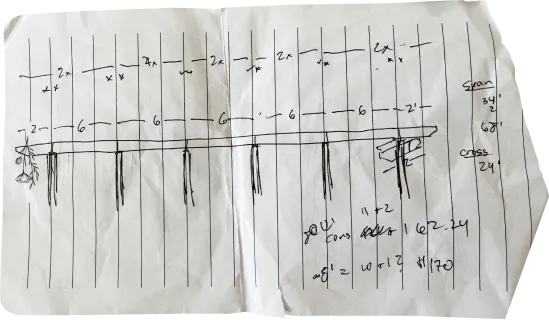
The lo-fi design phase was me with scrap paper, a pencil, and a dangerous level of confidence in my math skills…I am not good at math. I knew how wide the panels and opening was, so I just needed to figure out how many panels I could add. Easy, right?
Getting Precise
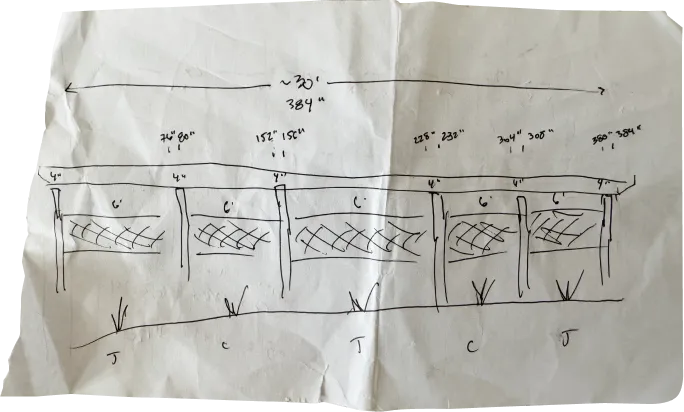
For the hi-fi pass, I got more precise: measuring the actual run, accounting for post spacing, calculating panel counts and widths. I even started deciding on vines to grow on the fence. Once I was reasonably confident, I put together the full materials list and placed the order.
Stakeholder Sign-off
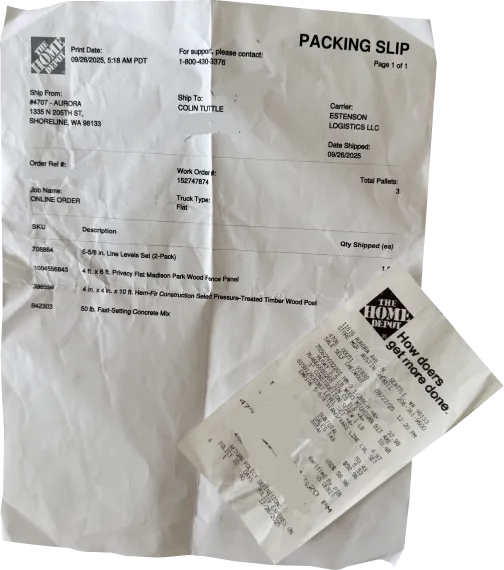
Every project needs an artifact from the funding approval conversation. Here's mine.
Note: This receipt does not reflect the emotional cost of remeasuring a post hole three times because I was convinced the ground had moved.
The Build
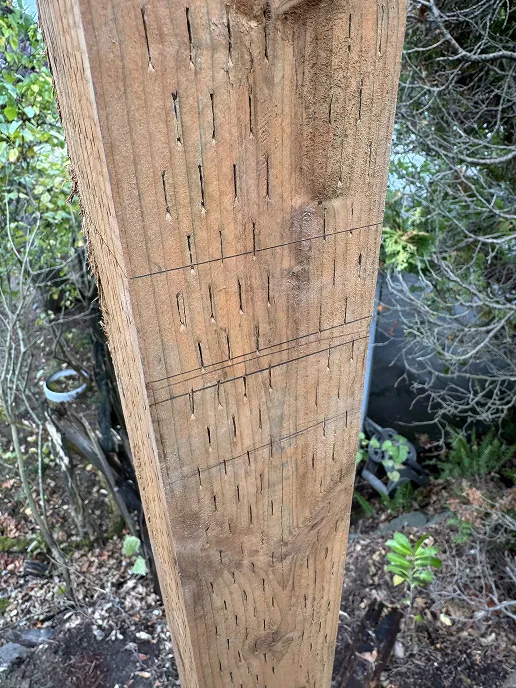
Execution happened across a few weekends, each one humbling in its own specific way. I am, as previously established, not great at math. My solution to this is not to improve at math but to recheck the same measurement an unreasonable number of times until confidence arrives through sheer repetition.
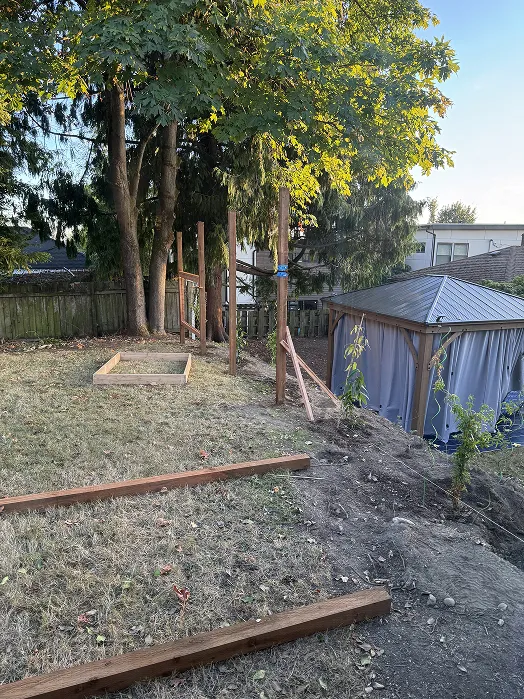
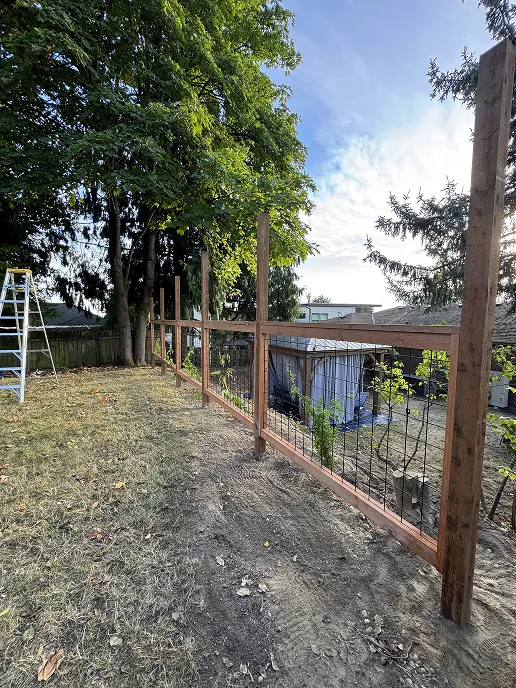
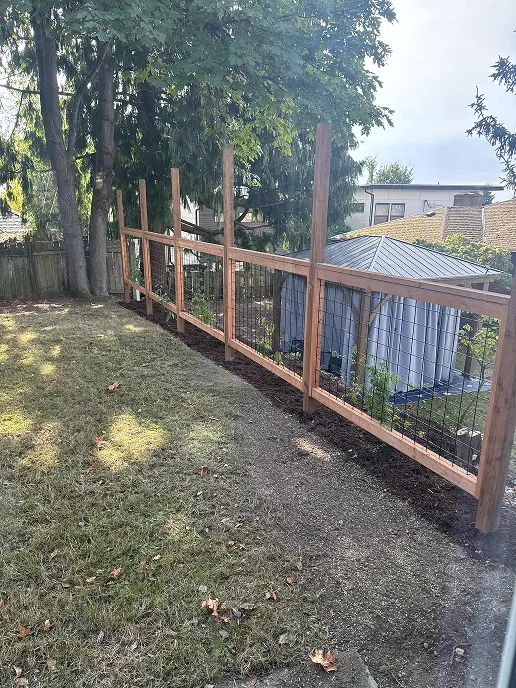
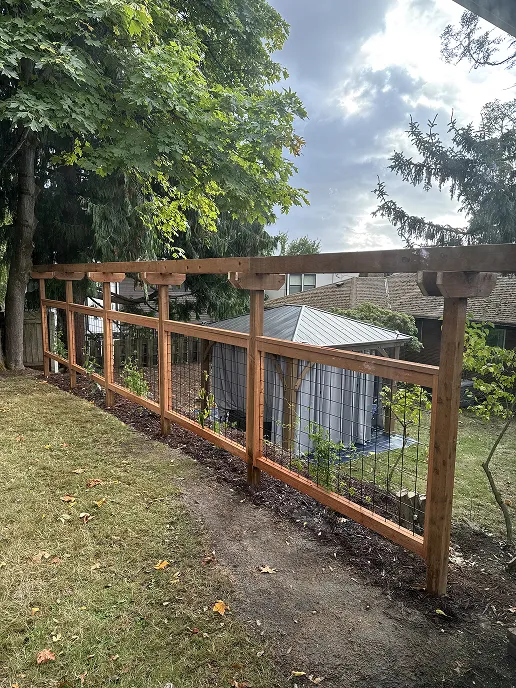
Result
$15k+
Estimated home value added (unverified, vibes-based, I'm keeping it)
↑63%
Toddler accident protection
0%
Reduction in 2am spotlight intrusions
Long-term ROI requires significant growth from the Jasmine vines.
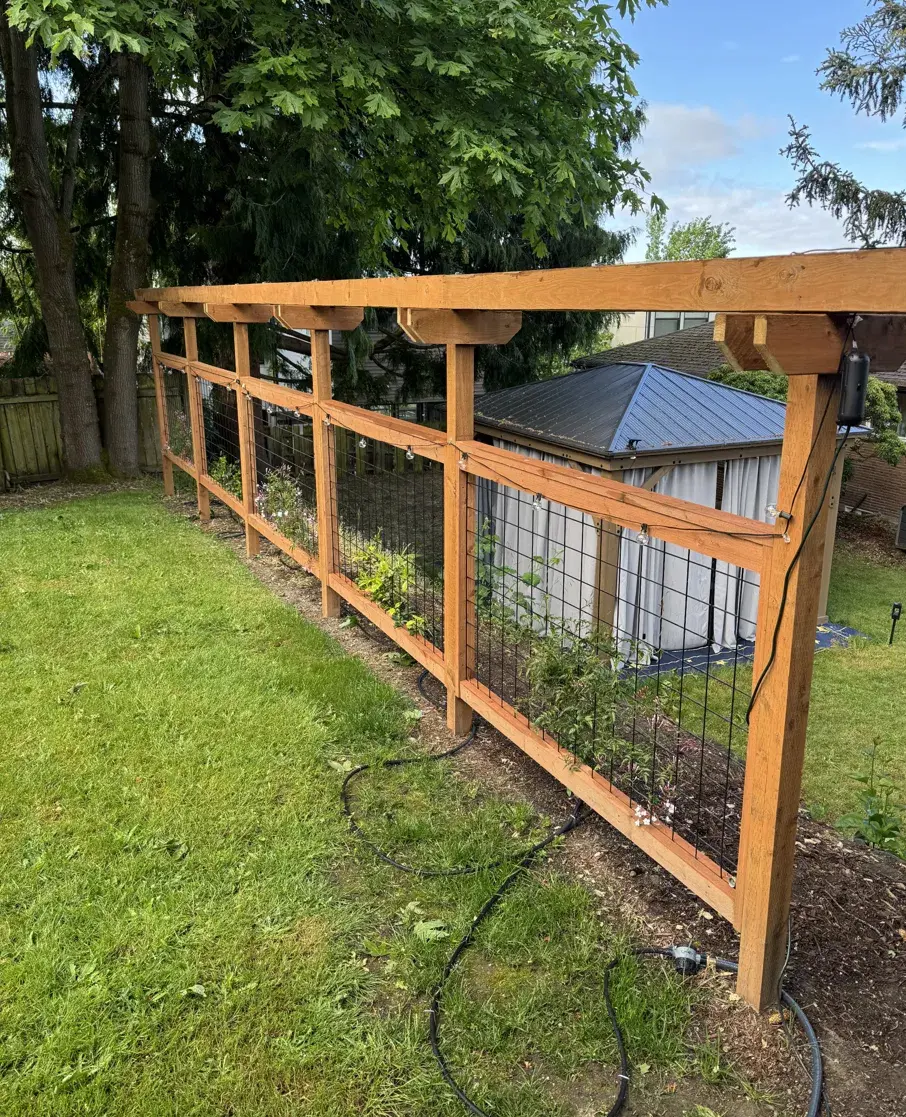
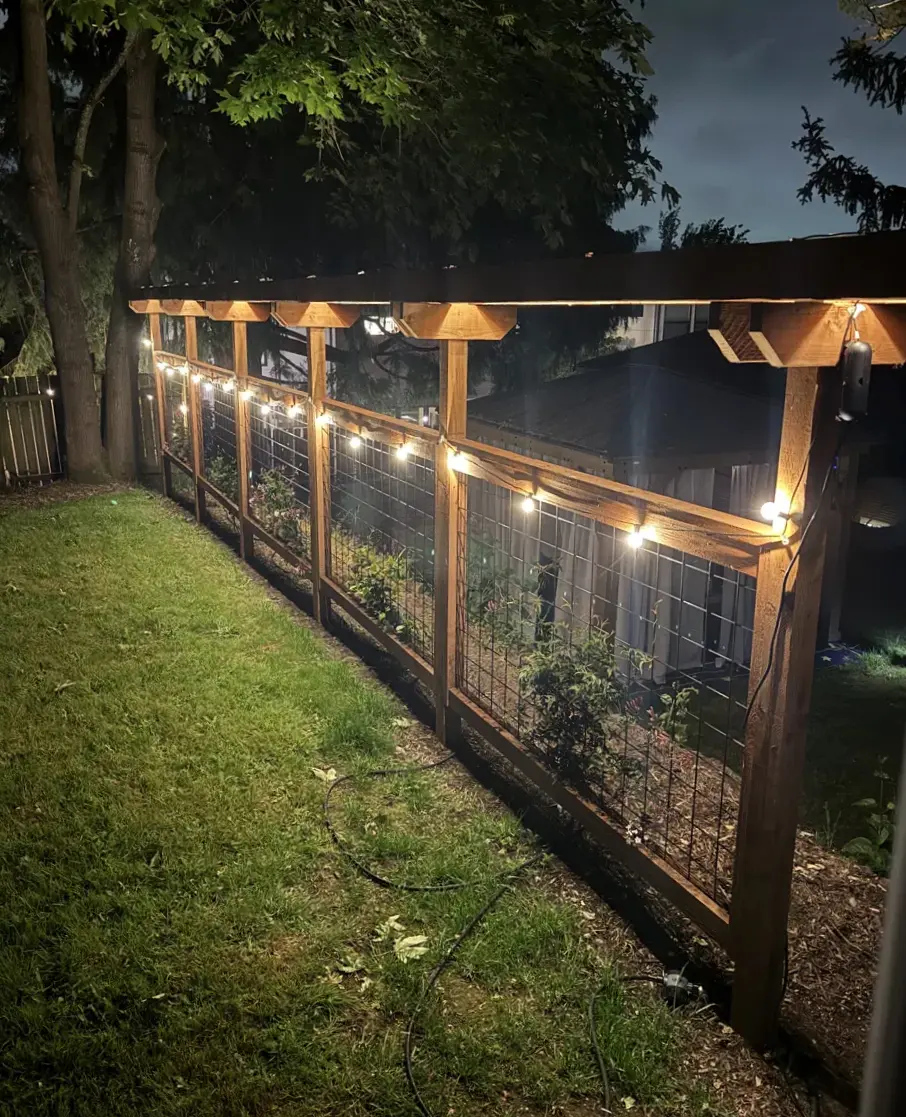
Try switching to dark mode
Try switching to light mode
Reflection
What transferred
The design process holds up outside of Figma. Define the real problem (not the surface-level one), explore options, prototype, build, iterate. The fact that the deliverable is made of cedar and galvanized wire instead of components and auto-layout doesn't change the approach.
Learnings
More than I can count. I'm not a carpenter, but my FIL is and he was impressed, so I think that's a solid endorsement.
I learned that if you build something well, your wife will ask you to build more things.